
A dashboard full of charts is not the same as measuring. Digital marketing KPIs are the handful of numbers that tell you whether what you spend comes back, and which ones they are depends on your business.
Almost every business that comes to us arrives with a report under one arm. Followers, impressions, visits, reach… pages and pages of numbers going up and down. But ask how many clients all that brought in and the room goes quiet. That is exactly the problem digital marketing KPIs solve: separating the numbers that just look good from the ones that tell you whether the money you put in comes back.
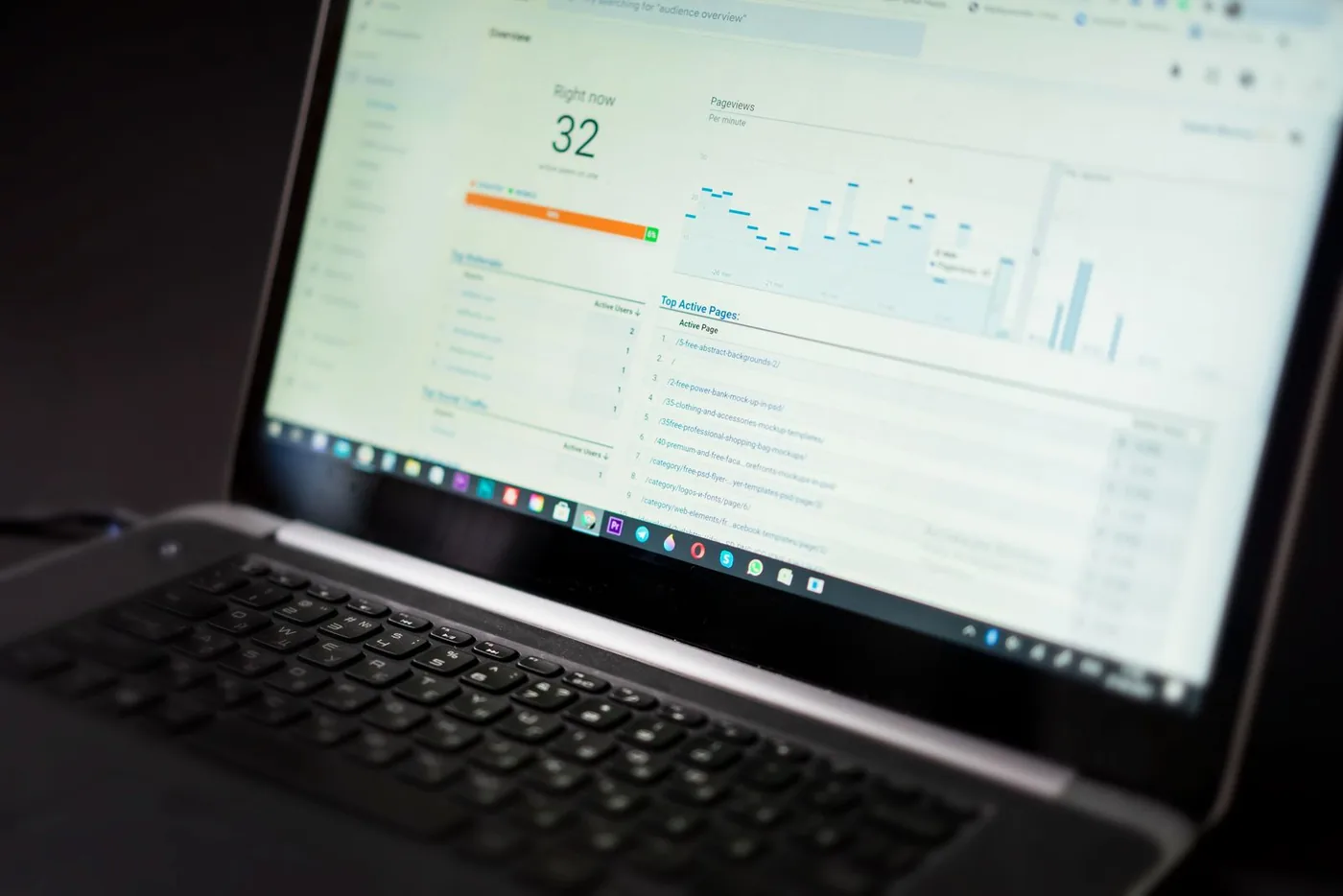
KPI stands for key performance indicator. In plain terms: a number you have deliberately picked because it tells you whether you are doing well or badly against something you want to achieve. The important word is "key". Not everything that can be counted deserves a look every month, and that is where most people get lost.
The test for whether something is a real digital marketing KPI or just curiosity is simple: ask yourself what you would do differently if that number moved 20 % up or down. If the answer is "nothing", it is not a KPI. If the answer is "I would shift the budget on this campaign" or "I would review the contact page", you have just found a good one.
It helps to separate two things that get mixed up constantly. A metric is any piece of data you can measure: followers, impressions, clicks, time on page. A KPI is the metric you have decided measures your goal and that you answer for. Every metric is data; only a few are KPIs.
Followers are the classic case. Brilliant metric for feeling good, fairly useless for paying wages. We have seen accounts with twenty thousand followers that do not bring in a single call a month, and small profiles belonging to a village workshop that keep the diary full. What changes is not the number: it is what it measures.
There is no universal list, because an online shop and a firm that works on quotes do not measure the same things. But three families cover almost everyone.
These are the numbers that tell you whether you are being found, and through which door. Visits by channel (Google, social, ads, direct), search positions for the words that matter to you, cost per click if you advertise. On their own they are not worth much, but they are the thermometer for the top of the funnel: if nobody comes in here, nothing comes out down there. To see it without going mad, most people lean on Google Analytics 4, which is built around events from the start.
This is where you find out whether your website does its job. The conversion rate —the share of visits that end up doing what you want, whether that is buying, calling or filling in a form— is probably the most honest KPI there is. Multiplying visits is expensive; improving conversion is usually far cheaper and the effect runs through the whole chain. If two people in every hundred visits leave their details and you get that to three, you have raised sales by 50 % without spending another euro on ads.

And now the ones that really settle things. These four answer the only question that counts: does this pay off?
CAC and customer value always have to be read together. A CAC of €90 looks expensive until you see that the client stays two years and leaves €1,200. And a CAC of €15 is a disaster if the client buys once and never returns.
The right order is goal first, number second. It sounds obvious and hardly anyone does it: the usual approach is to open the tool, see which charts come as standard and start watching those. We do it the other way round, and it works better.
That last point is the hardest. Letting go of numbers feels risky, but a dashboard with thirty indicators does not get read, and what does not get read is no use for deciding. If you are building this from scratch, it fits better inside a proper marketing plan than as a loose spreadsheet.
A dashboard is the screen where you see your KPIs together, without having to log into five different places. The rule we use: it has to be understood in two minutes, with nobody explaining it. If it takes a phone call to interpret, it is badly built.

Three things help a lot. One, put the target and the real figure side by side, so you can see at a glance whether you are short or ahead. Two, always compare against the same period last year if your business has a season, because comparing August with October says nothing. And three, give every number an owner: if a KPI is nobody's responsibility, nobody moves it. The official Google Analytics documentation explains well how to set up the events that feed all of this.
Not all KPIs move at the same pace. Paid advertising asks for a weekly look, because that is where money burns fast and a campaign gone wrong costs you dearly in seven days. Conversion and leads work well on a monthly review. And SEO or brand are almost better checked quarterly: they are slow things, and looking every Monday only leads to fiddling with what needed time, not changes.
At Magnes Factory we start here before touching anything, because without clear numbers everything else is opinion.
Because the point of measuring is not pretty charts: it is knowing where to put the next euro.
A KPI is a key performance indicator: a number you have deliberately chosen because it tells you whether you are on track against a goal. What separates it from any old metric is that a KPI has a decision behind it. Visits are a metric; if your goal is to bring in clients, your KPI is how many of those visits end up asking for a quote.
Fewer than you think. Four or five per goal is plenty; past that you start watching numbers that change no decision. Better to have a few and genuinely review them each month than thirty in a report nobody opens. If a number will not make you change anything, it is not a KPI, it is curiosity.
It depends on your business, but almost everyone ends up watching four: what it costs to win a client (CAC), what advertising gives back (ROAS), the website conversion rate and the value of a client over time. With those four you know whether marketing pays off, which is the question that counts.
Paid advertising deserves a weekly look, because that is where money burns fastest. The rest works better monthly, and SEO or brand are almost better checked by quarter so the noise does not drive you mad. Checking numbers daily usually leads to fiddling with things that only needed time.
Every metric is data, but only a few are KPIs. A metric reports what happens (followers, impressions, visits); a KPI is the metric you have decided measures your goal and that you answer for. Put another way: you watch a metric, you chase a KPI.
The Spanish government grant for digitising your business is opening again. When it opens it runs out: it is granted in order of arrival, and whoever turns up with the paperwork ready gets in.
What is usually required: being a freelancer, micro-business or SME with a tax address in Spain, being up to date with the tax office and social security, and having completed the self-assessment test. The timetable is published by the government at acelerapyme.gob.es.